
“His best years have been taken away from him”
 A construction company has been fined after a worker sustained life-changing injuries when he fell more than two metres while replacing steps at a residential property in Leamington Spa.
On 16 July 2024, 65-year-old Nicholas Crow, a bricklayer employed by Sibbasbridge Limited, was working at a domestic property on Binswood Avenue in Leamington Spa when he fell through a gap in a balustrade into a basement lightwell approximately 2.6 metres below.
The gap had been created the previous day when railings were removed to allow the old steps to be taken out. While helping to install new steps, Mr Crow fell through the opening and landed on the floor below.
Mr Crow suffered serious injuries, including head trauma and a stroke. He now experiences difficulty writing and holding objects, has mobility issues requiring the occasional use of a wheelchair, and has been left with speech and memory impairments.
Read more on the HSE website.
Industry and government set new bar for workplace health
 A new framework has been launched to raise the standards of physical and mental health at work, within the chemicals and major hazards industries.
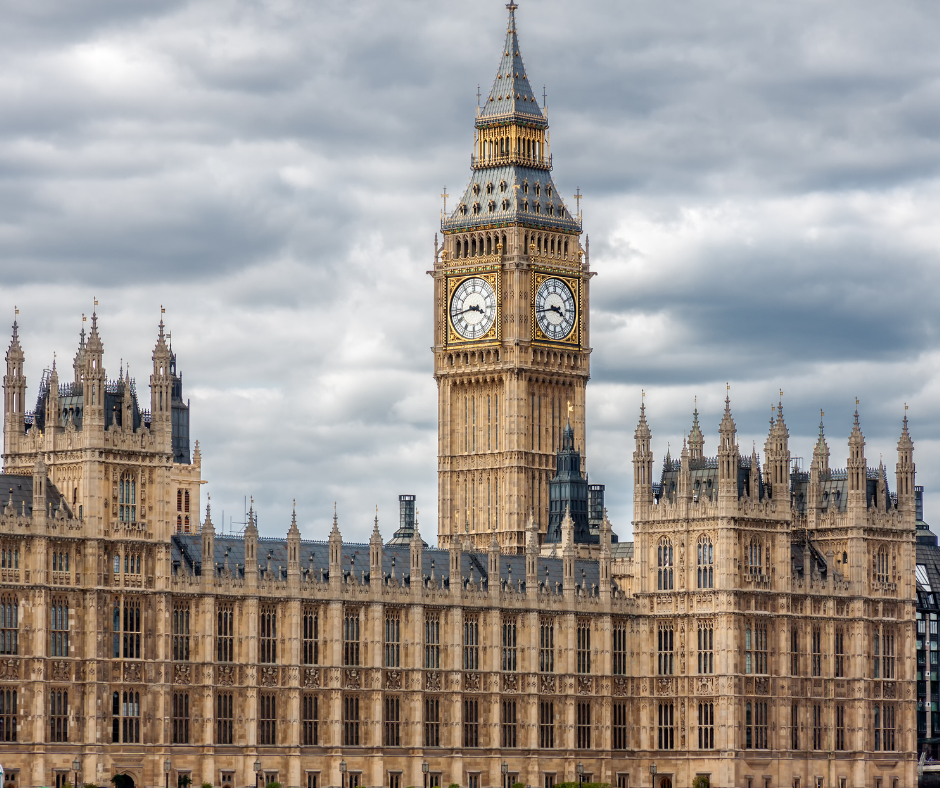
The new Principles of Workplace Health and Wellbeing Leadership were officially launched on 24 June at the House of Lords at an event hosted by Lord Ian McNicol and sponsored by Baroness Brenda Dacres OBE. The launch event featured an address by the Minister for Social Security and Disability, Sir Stephen Timms, who spoke on the importance of preventing work-related ill health, keeping people in work and growing the economy.
The principles were developed by the onshore Chemicals and Major Hazards working group, as a response to Health and Safety Executive’s (HSE) Prevention Programme, to place clear accountability on senior leaders, building on the model established for process safety leadership following the 2005 Buncefield tragedy.
Learn more on the HSM website.
Businesses ordered to stop work with engineered stone after failing safety inspections
 Four companies have been ordered to stop working with engineered stone as part of a crackdown to protect workers from deadly dust.
The companies received prohibition notices (PNs) following visits by Health and Safety Executive (HSE) inspectors. The notices are enforcement actions that require the businesses to stop the work immediately and take steps to improve safety. Each of the firms was found to have had a lack of control measures in place to keep employees safe while working with engineered stone.
HSE launched a package of measures last month to protect workers from the dangers of engineered stone dust. It followed concern about the deaths of young workers from silicosis – a deadly-but-preventable lung disease caused by breathing in respirable crystalline silica (RCS). A nationwide inspection campaign was launched to run through 2026, and inspections have resulted in these four enforcement notices being served as of the end of May.
HSE enforcement notices are published approximately five weeks after they are served to account for the appeals process and internal quality assurance.
Publication of new guidance from HSE made it clear that dry cutting of engineered stone is unacceptable, and the regulator plans to conduct more than 1,000 visits at which enforcement action to be taken against those failing to meet the required standards.
Visit the HSE website to read more.
Latest annual work-related fatalities published
 Great Britain continues to be one of the safest places in the world to work, according to new analysis published today (1 July) by the Health and Safety Executive (HSE).
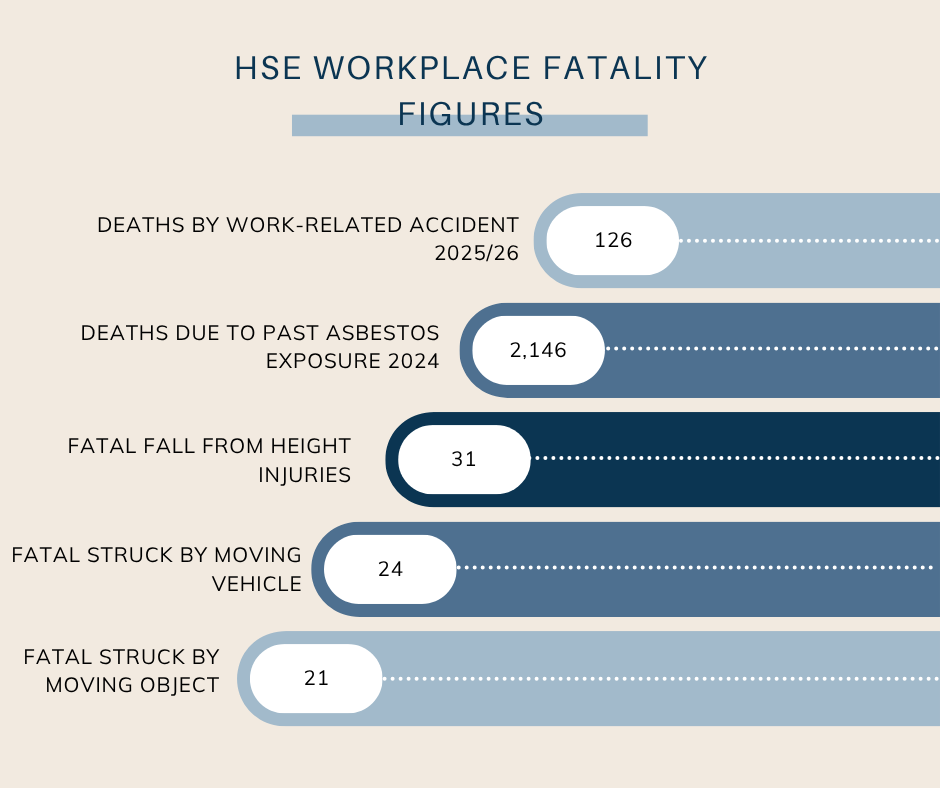
The analysis comes alongside the annual release of HSE’s statistics for work-related fatalities for 2025/26, which show that 126 workers were killed in work-related incidents in Great Britain (GB).
HSE has this year developed new analysis comparing the level and trend of fatal injuries to workers in GB with a selection of 35 other countries from around the world, meaning for the first time the results can be compared with countries outside Europe. This analysis provides further supporting evidence that GB is maintaining its position as one of the safest places to work.
Excluding the years affected by the coronavirus pandemic (2019/20-2021/22), the number of worker deaths in 2025/26 is provisionally the lowest number recorded in a single year, comparing to 217 fatalities twenty years ago (2005/06) and 495 in 1981.
Read more about the report on the HSE website.
To keep up to date with the latest health & safety news and advice, follow us on social media: