
Evacuation plans are required by law to ensure that everybody knows what to do in the case of an emergency. It is important that your plans are specific to your workplace and take all potential factors into account.
What are some evacuation hazards?
 Evacuation hazards should hopefully be rare events and may be location dependent. General hazards include fire, structural failure and bad weather. Site specific evacuation hazards could include chemical leaks, flooding, gas leaks and explosions.
Identifying these hazards is a key part of risk assessing your site. When you are risk assessing, you should cover the location and layout of the site, materials on site, work processes and byproducts that can be caused as a part of your works. For instance, public pools can cause toxic leaks of chlorine gas if chemicals are mixed improperly.
Examples of location specific risks can include flooding of rivers next to premises, falling trees, busy curved roads leading to cars hitting walls and subsidence.
What should an evacuation plan include?
An evacuation plan is key to ensuring all staff make it off the premises safely. As a part of risk assessing the premises, you should check planned routes to make sure they are suitable for use. This includes checking for slip/trip hazards, ensuring no dangerous materials are stored on/next to escape routes.
All escape routes should be marked with enough exits for the size of the site and the number of people. Travel distances are key to consider when planning routes and having more usable exits effects the maximum travel distance.
Visibility on escape routes is another consideration. Do you have working emergency lights? Are they located along escape routes? Is the assembly point signed?
Finally, have you trained your staff in how to escape the premises? Emergency arrangements should be included in inductions and training should be periodically refreshed. This can be as a part of drills undertaken regularly
How can you prepare staff for evacuation?
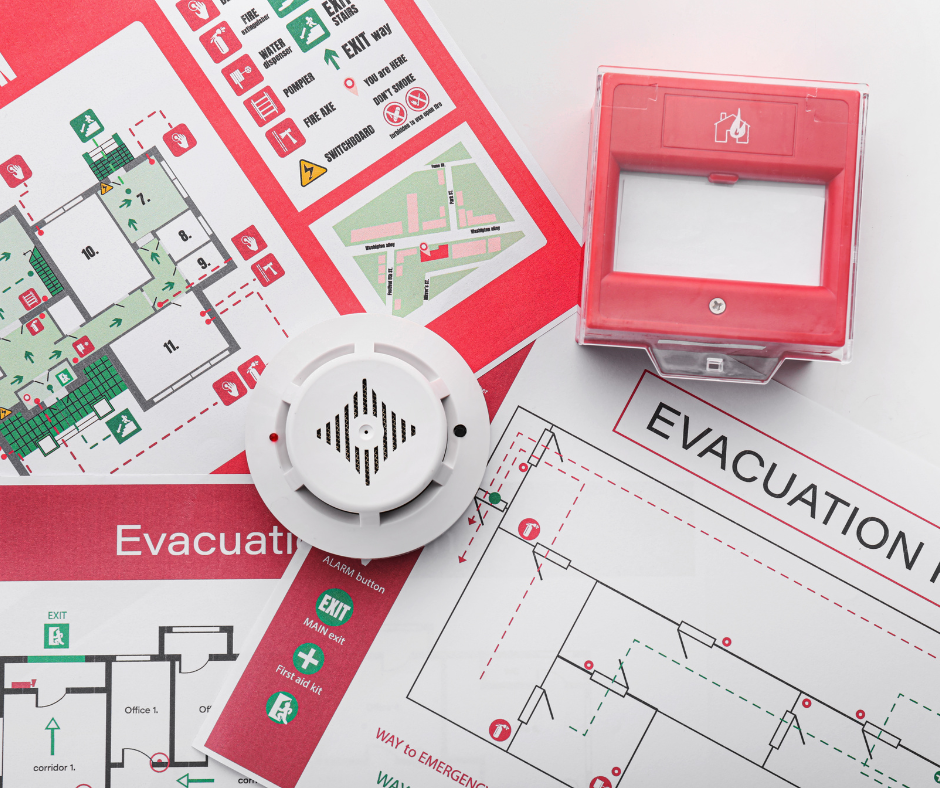 Preparing staff for evacuation is a key part of managing the risks. Staff need to know the evacuation plan so they can escape if the worst were to happen. Part of managing this is training, undertaken at induction and regularly afterwards, recorded escape drills, communicating the plan and who the marshals are.
If there is a member of staff who needs a PEEP (Personal Emergency Evacuation Plan), this plan should be personalised to their particular needs. Potentially they may need assistance to escape or alternate measures like flashing beacons should be installed.
Above all, make sure the plan is communicated clearly and that all staff can understand it.
How can WA Management help?
As part of our online training shop, we offer an Evacuation Safety online training course which can be accessed 24/7 online via desktop or tablet.

Evacuation Safety and New and Expectant Parents training courses are essential tools in keeping your office workers safe. Make sure you don’t miss out on our 10% off deal on these courses, available until the end of May. Simply enter the code ‘office10’ at checkout to save!
Read more Consultant’s blogs here.
To keep up to date with the latest health & safety news and advice, follow us on social media: