Manual handling is a common hazard in the workplace, covering any task that involves transporting or supporting a load by hand or bodily force.
As an employer, it is important that you can spot where your employees might be struggling with such tasks, so that you can implement appropriate control measures to reduce the risk of injury.
Check the working conditions
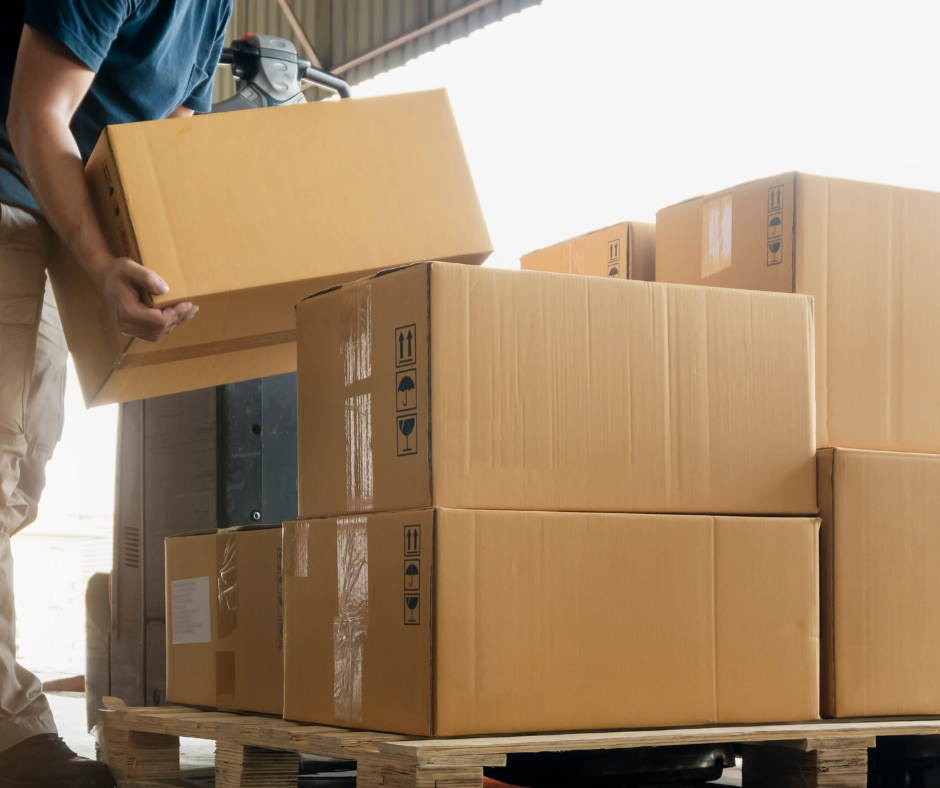 Manual handling is often a part of people’s daily work routine.
Tasks vary from single, one-off instances to repetitive daily procedures.
When assessing the manual handling tasks you require your staff to complete, you need to assess the process from start to finish.
This includes where the task is, lighting conditions, temperature, the task type/frequency, the load and so on.
The weight of the load is one of the key pieces of information you’ll need to check but other things to take into account with the load include:
- how are people holding it?
- is there an easy handle or holding point?
- what’s the centre of gravity?
With the environmental factors as well, make sure to take into account the time of the year!
If people are manual handling outside or in un-heated environments, winter can raise many problems such as ice, cold or low light conditions.
Summer heatwaves also can mean people over-exert themselves much more quickly and become dehydrated.
Look out for physical signs
Physical signs are key for recognising if a member of staff is having difficulties.
Over-exertion can present itself as sweating, heavy breathing, fatigue, reduced mobility, dizzy spells. They may also have to stop more often when they are carrying due to arm strain.
In extreme heat, someone may stop sweating entirely which can be a dangerous sign of heat stroke.
Members of staff may be noticeably slower or reluctant to carry out manual handling tasks when they are fatigued.
Consult your employees
 Above all, it depends on the individual member of staff as to how much is too much.
The best way to manage manual handling is to talk to your employees.
Consult with the people who are carrying out the tasks when you are making your risk assessment.
As its’ a part of their day to day tasks, they may have practical solutions or know something about the workplace that you don’t.
Consulting can be done face to face, via anonymous paper slips if people feel nervous about speaking up.
Regular H&S committees can also help to encourage representatives from the workforce to speak up.
How can WA Management help?
WA Management offer an online Manual Handling training course which provides awareness education for anyone in the workplace, but especially those who lift, lower, push, pull, carry, move, hold, restrain or set down a load during their daily tasks.
We also offer bespoke risk assessments for any activities that may involve manual handling.
COSHH and Manual Handling training courses are essential tools in protecting the safety of your workers. Make sure you don’t miss out on our 10% off deal on these courses, available until the end of March. Simply enter the code ‘warehouses10’ at checkout to save!