
As part of September’s Hazard of the Month, the Building Safety Act, we’re highlighting two key areas: Building Safety Act and Fire Safety.
Building Safety Act
 The Building Safety Act 2022 establishes legal responsibilities for those involved in the design, construction and management of buildings in England, with a particular emphasis on higher-risk residential buildings.
The Act primarily applies to Higher-Risk Buildings (HRBs), which are defined as buildings that:
- Are at least 18 metres in height or 7 storeys tall.
- Contain two or more residential units.
A significant reform introduced by the Act is the creation of the Building Safety Regulator (BSR), a statutory body operating within the Health and Safety Executive (HSE). The BSR acts as the central authority responsible for maintaining and improving building safety standards throughout a building’s lifecycle.
The BSR is responsible for:
- Overseeing the safety and performance of higher-risk buildings
- Holding dutyholders accountable for meeting their legal obligations
- Enforcing compliance through investigations, enforcement notices and penalties
- Promoting competence, leadership and best practice across the built environment sector
Fire Safety
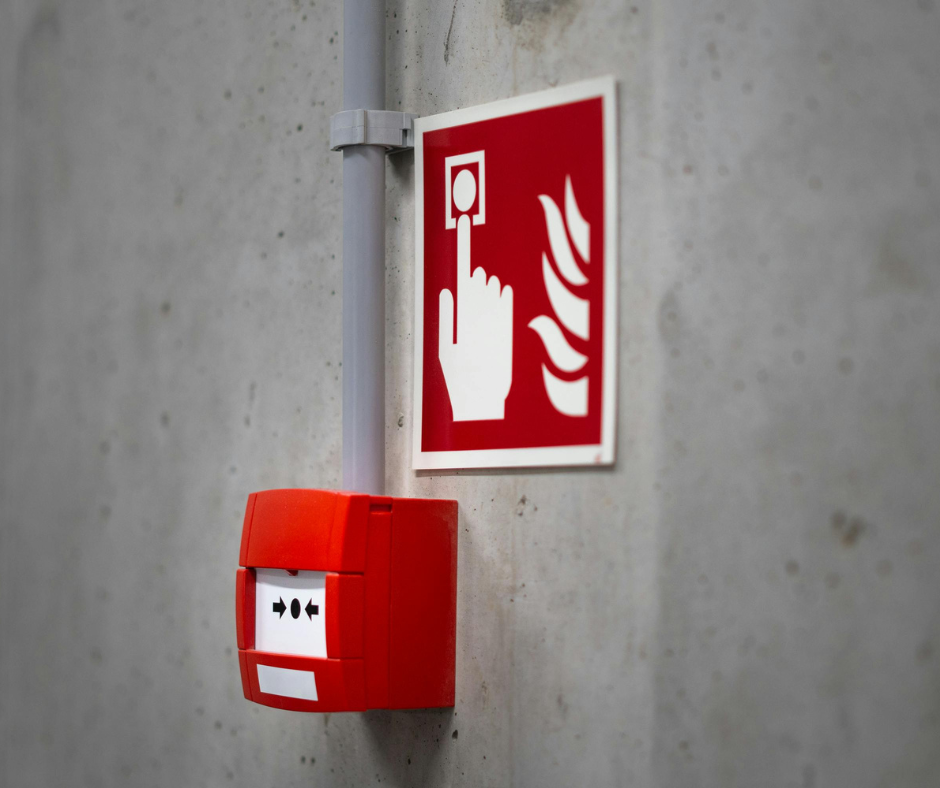 The key to effective fire safety management is preventing a fire starting in the first place.
If you are able to recognise fire hazards, know how to eliminate them, and can reduce their impact, fire risk is greatly reduced.
While your organisation will have a responsible person appointed to oversee fire safety, everyone in an organisation has a responsibility to prevent fires in the workplace.
Everyone should know what basic actions to take to prevent fires, reduce the risk of fire spreading, and how to respond in an emergency.
To prevent fires:
- Keep work areas free from rubbish and unnecessary waste
- Store materials and equipment in accordance with approved storage procedures
- Comply with all workplace smoking regulations and designated smoking areas
- Immediately report any damaged plugs, overheated sockets, overloaded extension leads, or faulty electrical equipment
- Ensure flammable substances are stored securely and kept away from ignition and heat sources
To maintain fire door effectiveness:
- Keep all emergency exits, escape routes, and access points clear and unobstructed at all times
- Report any issues that could hinder safe access or emergency evacuation immediately
- Ensure fire doors remain closed unless fitted with an approved automatic hold-open and release system
In an emergency:
- Be familiar with the emergency procedures and understand the actions you should and should not take in an emergency situation
- Ensure you can recognise the fire alarm signal and know the designated assembly point to report to when it sounds
- Know the location of fire extinguishers within your work area and understand which types of fire they are suitable for tackling
Learn more about fire hazards and how to control them with our Fire Safety Online Training Course. Get 10% off this course with the code ‘bsa10’!
Building Safety Act and Fire Safety courses are essential tools in understanding duties under the Building Safety Act and ensuring fire safety awareness within your team.
Make sure you don’t miss out on our 10% off deal on these courses, available until the end of August. Simply enter the code ‘public10’ at checkout to save!
Read more Safety Spotlight blogs here
To keep up to date with the latest health & safety news and advice, follow us on social media: