In 2026 there is less need to rely on climate models to predict incoming climate change; it is clear we are living through it.
The UK has just experienced its 3rd heatwave of the year and is facing a second drought in two years. In fact, 2025 was the warmest year in the UK since 1884, with the last four years in the top five warmest.
This increase in temperature has a multitude of effects on businesses and is already causing major disruption to operations, employees and long-term resilience.
As a result, the ability to adapt to these changing environmental conditions is a vital part of business sustainability and risk management strategies.
What are the business risks associated with climate change in the workplace?
 Summarising the effects of climate change is difficult, as the problem is a leviathan that affects the all businesses in ways that is specific to each organisations context.
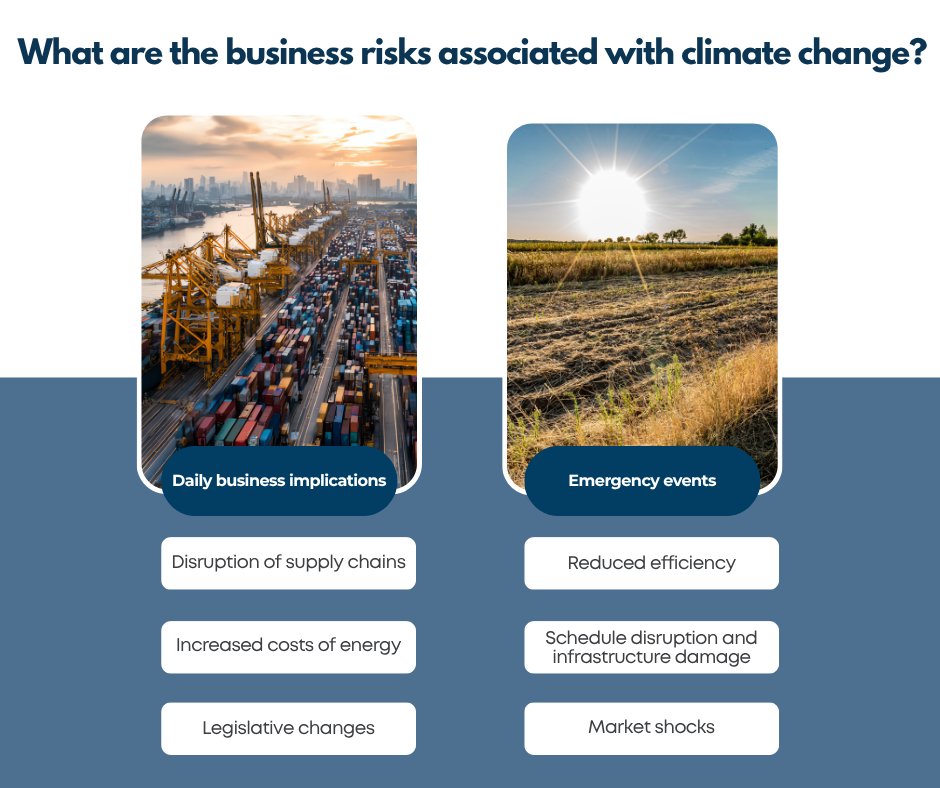
Examples of daily business implications can include:
- Disruption of supply chains, particularly international, due to limited stress international; these issues can also lead to fluctuation of prices for goods.
- Increased costs of energy, due to international markets and demand for cooling systems.
- Legislative changes as governments try to grip the climate agenda and failure to comply with new or changing legislation can have financial or legal consequences for businesses
Examples of emergency events can include:
- Heat waves can cause reduced efficiency of employees and potential heat stress. Working arrangements will need to be altered and health of employees may be at risk.
- Increased propensity for adverse weather, causing disruption to planned scheduling or damage to infrastructure or potential injury risk to employees.
- Market shocks due to global adverse weather events can have huge impact on the global economy and filter down to SMEs at home.
Why is climate resilience important for business continuity and sustainability?
When considering business risk climate change should be assessed no different to any other disruptive business risk.
Although most SMEs have little control over the cause and effects of climate change, they do have control over their planning and response to the potential implications.
Identifying and planning for the foreseeable hurdles can help to ensure business continuity, improve employee safety, lower costs and even identify opportunities.
How can businesses improve workplace resilience to climate change?
 Climate risks should ultimately be treat with the same approach as all business risks. There should be an identification of the risks, which should be evaluated and then controls put in place to mitigate with regular reviews conducted.
Some risks may be considered as wider business strategy and process, such as identifying alternative suppliers or backup suppliers in the event of disruption; or setting out emergency plans and processes if you are likely to be affected by flooding.
Other risks may be considered as a part of your health and safety risk assessment process, such as reasonably practicable controls during a heat wave.
You may want to consider your businesses overall environmental impacts and aim for continual improvement by adopting ISO14001 which has recently been updated with a 2026 issue.
How can WA Management help?
WA Management offer an Environmental Awareness online training course to help your organisation reduce its environmental impact.
We also offer support with the implementation, operation and ongoing management of business management systems, including ISO 14001.
Environmental Awareness and Legionella courses are essential tools in reducing your environmental impact and protecting employees from environmental hazards.
Make sure you don’t miss out on our 10% off deal on these courses, available until the end of July. Simply enter the code ‘eco10’ at checkout to save!
Read more Consultant’s blogs here.
To keep up to date with the latest health & safety news and advice, follow us on social media: