The advancing sophistication of Artificial Intelligence (AI) is showing a myriad of opportunities within the world of health and safety.
Far beyond writing risk assessments and method statements, AI can be combined with existing technology to allow predictive risk management, advanced monitoring systems, improve efficiencies and productivity.
For example, camera monitoring equipment trained on AI models can help to identify wastage in factory operations or recognise systems which could result in accidents.
Equally, automation of plant and machinery can remove risks associated with human interaction.
However, AI is not perfect and there is a compromise that often has to be made when using it.
Incorrect application can have serious consequences for workplace health and safety which I will discuss below.
Can over-reliance on AI increase workplace accidents?
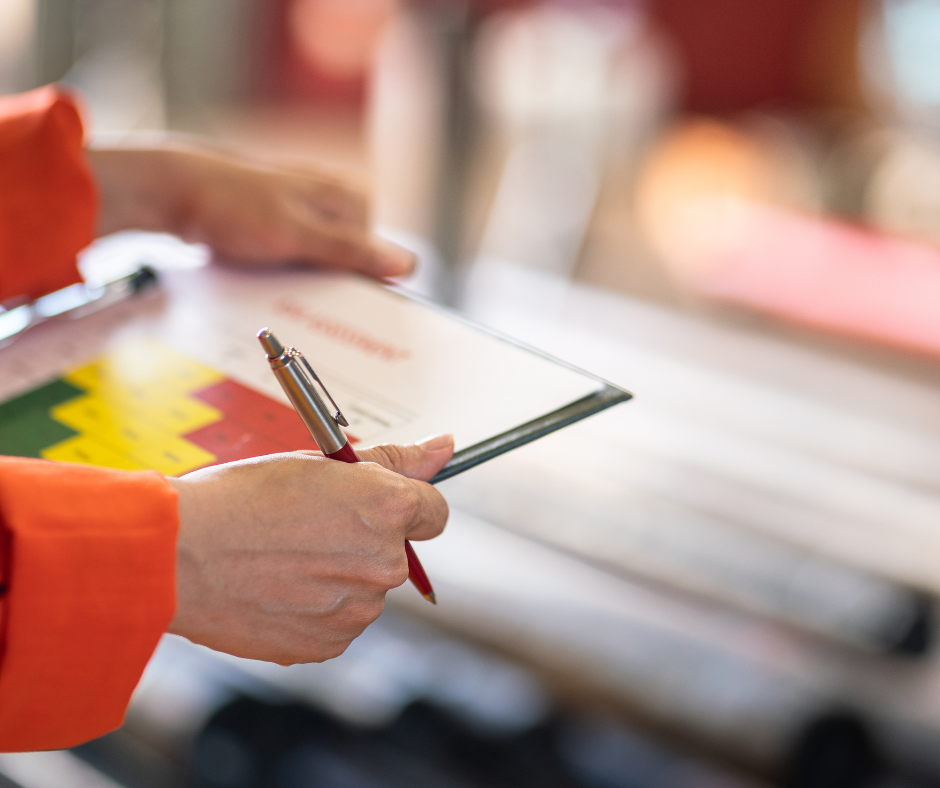 If used incorrectly over reliance on AI could result in a decrease in safety performance.
It is essential when we use AI that we use it as a tool and not a replacement.
AI models should be used to support and assist existing safety policies and procedures.
An over reliance on AI could lead to workers developing poor risk awareness or an inability to diagnose problems themselves.
Furthermore, as with all technology AI is trained to complete a task and may not be receptive to changing environments in the way a human can be. AI may, in some instances, prioritise completing its trained task at the detriment to safety.
We must always remember that AI does not exist in the physical human world, it cannot accurately process human behaviours and emotions, which are often a key factor in risk mitigation.
Human relationships, interactions between individuals and wide safety culture is the key post important factor in developing good workplace safety, of which an AI tool should assist, not replace.
What are the risks of using AI to write risk assessments?
AI has a place when it comes to documentation, which is often most peoples initial negative reaction to health and safety when you ask their opinion.
It is clear more businesses are using AI to develop risk assessments, working procedures and policies.
However, as stated previously this should not replace and should only supplement a foundational starting point for these documents – particularly risk assessments.
An AI tool may be useful to generate a starting risk assessment, covering generic hazards and controls that are common to the task being undertaken, this can save time and provide a foundation to be built on.
However, it is imperative that it is not left to complete the whole document for a number of reasons.
Firstly, in a legal sense risk assessments must be completed by a competent person; this has to be a living person who has the skills, knowledge, experience and training to create and suitable and sufficient risk assessment, by law a person’s name must be attached to it.
Secondly, although AI models have shown they can develop risk assessments that include basic generic hazards they are only reliant on the data that is given to them.
A simple prompt will not give adequate information to suitably create a detailed risk assessment; this requires a competent person to observe a task or a workplace, talk to individuals involved and understand their behaviours and attitudes which allows an evaluation of risk.
How should businesses manage health and safety risks associated with AI?
 Businesses must ensure that they have a rigorous health and safety management system that includes robust policies and arrangements for management of AI.
The plan, do, check, act process for managing safety can also be applied to AI.
The company should include the use of AI in its IT or data security policies or have its own standalone AI policy.
This should cascade the arrangements to ensure several key arrangements are in place:
- Employees are provided with suitable training on how to use AI safely and correctly.
- Safe work procedures are in place that include fail safes and final checks by humans where AI is used.
- Reviews of performance to assess the performance of the AI models and ensuring the latest safest software is used.
How can WA Management help?
WA Management offer an Understanding AI online training course, suitable for staff at all levels across all industries that addresses global best practice around AI use.
Cyber Security and Understanding AI training courses are essential tools in keeping your business safe from cyber security threats and AI misuse. Make sure you don’t miss out on our 10% off deal on these courses, available until the end of October. Simply enter the code ‘ai10’ at checkout to save!
Read more Consultant’s blogs here.
To keep up to date with the latest health & safety news and advice, follow us on social media: