
By law, employers are required to plan, manage and monitor the use of hazardous substances.
An important aspect of this duty is ensuring that substances are handles and stored in line with risk assessments and legislation.
What are the main substances covered by COSHH?
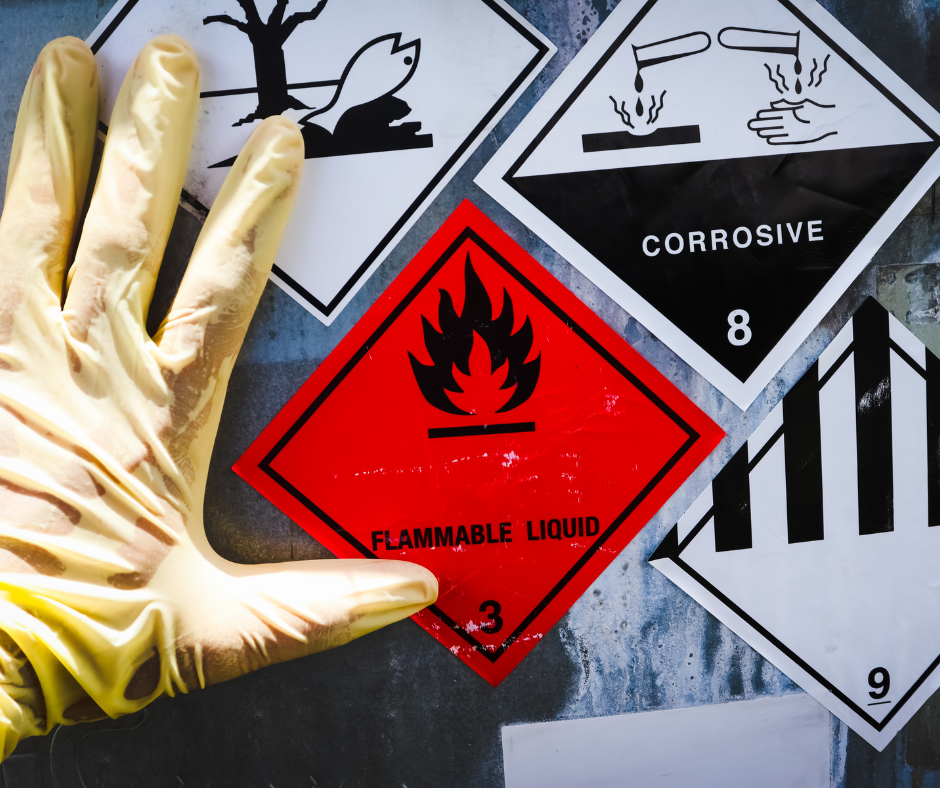 COSHH covers many forms of substances that are hazardous to health. These can include:
- Chemicals and Products Containing Chemicals such as bleach, cleaning agents, paints, adhesives and fuels.
- Fumes from welding or soldering.
- Dusts from things like wood, silica or cement.
- Vapours such as those from solvents and inks.
- Mists from spray bottles such as spray paints and cleaning sprays.
- Gases from chemicals such as chlorine, carbon monoxide and nitrogen.
- Nanotechnology such as carbon nanotubes.
- Biological Agents (germs) such as bacteria or viruses.
- Germs that cause diseases such as leptospirosis or legionnaires.
Lead, asbestos and radioactive substances are not covered under COSHH.
What are the requirements for COSHH storage?
There are 5 main types of COSHH cabinets for different chemical types. In some workplaces, COSHH cabinets are colour coded for the identification of a type if hazardous substance, each cabinet colour is equipped with its own features for containment. The following colours are more commonly used:
- Yellow – Commonly used for the storage of flammable materials or those that pose a risk of combustion or fire such as fuels, paints and aerosols. These cabinets are constructed with fire-resistant materials and have features like ventilation systems.
- Red – Typically used for storing materials that pose a risk to health. Constructed from durable materials, these cabinets tend to feature adjustable shelving, ventilation systems, and secure locking mechanisms.
- Grey – May be used for general storage or materials that do not fit into the other colour coded cabinets. They are designed to house a wide range of hazardous substances, are constructed from durable materials and tend to feature adjustable shelves and secure locking mechanisms.
- Green – Commonly used for storing pesticides, insecticides or substances harmful to the environment. Constructed from durable materials, these cabinets often feature adjustable shelving, ventilation systems and secure locking mechanisms.
- White – Typically used to store corrosive substances that need to be stored away from other chemicals, such as sulfuric acid and sodium hydroxide. These cabinets are equipped with spill containment trays, ventilation systems, and secure locking mechanisms.
How to carry out a COSHH risk assessment
 To carry out a COSHH risk assessment, a Manufacturer Safety Data Sheet (MSDS) for the product is needed. The MSDS will highlight the risks associated with the product, first aid measures and sufficient control measures.
When you have the MSDS, you need to think about who might be harmed and how they might be exposed to the product (absorption, inhaled, ingested). The effects each type of exposure may have on the worker, how often people work with the product and for how long will help identify what is currently being done to control the risk and if any more controls are required.
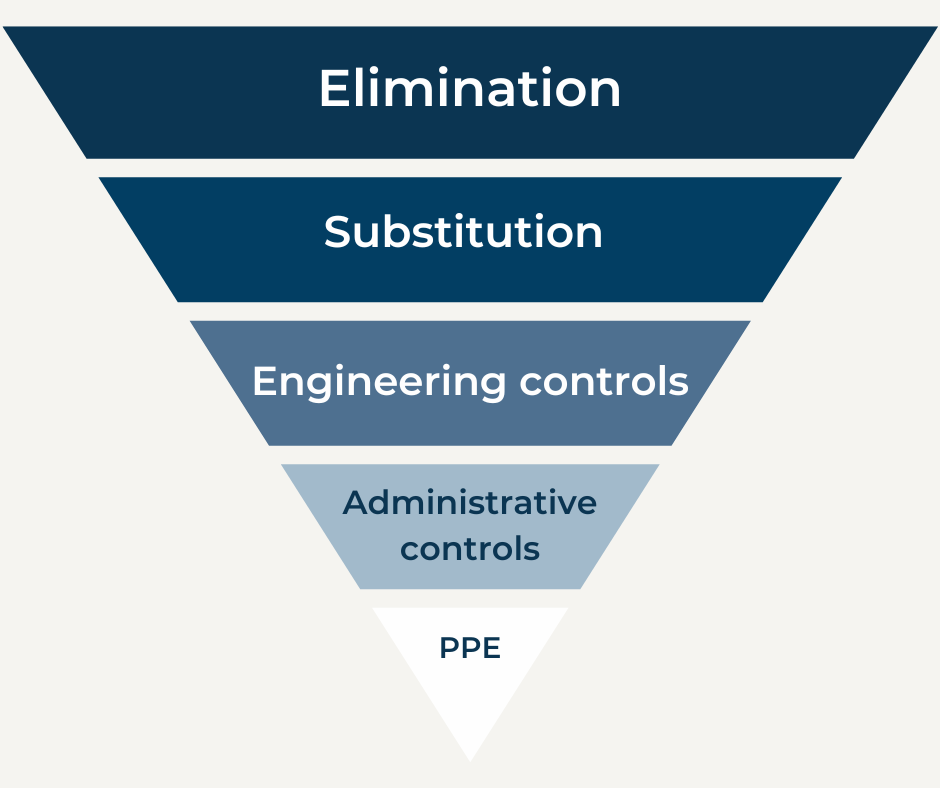
Controls range from eliminating the hazard all together, to providing PPE to reduce the harm. See below for examples of each type of control.
- Elimination – Modifying a task to remove the need for a hazardous substance.
- Substitution – Substituting a product with one less hazardous. For example, replacing a solvent based agent with a water based one.
- Engineering Controls – Equipment based controls. Such as introducing Local Exhaust Ventilation (LEV) to help remove fumes and dust.
- Administrative Controls – Changes to work practices or behaviours to reduce the severity of impact form a hazard. For example, restricting access to chemicals and providing training on safe handling and emergency procedures.
- PPE – The use of personal protective equipment, such as wearing nitrile gloves for handling chemicals.
Once your control measures are in place, the risk assessment should be reviewed regularly and any time there is a change relating to the product.
How can WA Management help?
As part of our online training shop, we offer a Control of Hazardous Substances online training course which can be accessed 24/7 online via desktop or tablet.
We can also create bespoke COSHH assessments from any MSDS sheet for any substances present in your workplace. Get in touch to enquire.

COSHH and Manual Handling training courses are essential tools in protecting the safety of your workers. Make sure you don’t miss out on our 10% off deal on these courses, available until the end of March. Simply enter the code ‘warehouses10’ at checkout to save!
To keep up to date with the latest health & safety news and advice, follow us on social media: