As part of October’s Hazard of the Month, Artificial Intelligence, we’re highlighting two key areas: Cyber Security and Understanding AI.
Cyber Security
 Taking steps to protect yourself and your business from cyber security risks is essential in today’s digital workplace. The good news is that improving your cyber security doesn’t have to be complicated. A few simple measures can significantly reduce your exposure to cyber threats.
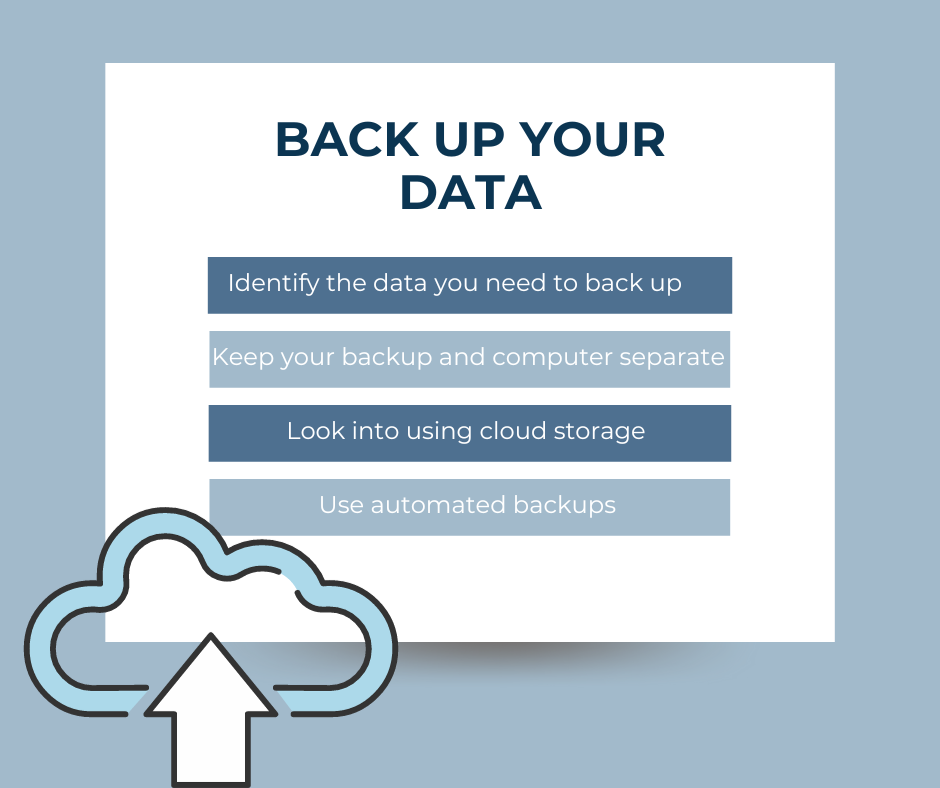
1. Back up your data
- Identify the important data that needs to be backed up.
- Keep backups separate from your main computers and systems.
- Consider using secure cloud storage.
- Set up automatic backups so they become part of your everyday processes.
2. Protect your systems from malware
- Install reputable antivirus software and keep it enabled.
- Restrict staff from downloading unauthorised third-party applications.
- Keep computers, software and other devices up to date.
- Limit the use of USB drives and memory cards.
- Make sure firewalls are switched on and properly configured.
3. Strengthen password security
- Enable password protection across devices and accounts.
- Use two-step or multi-factor authentication wherever possible.
- Use strong, unique passwords for different accounts.
- Consider using a reputable password manager to store passwords securely.
- Change any default passwords provided with devices or software.
Learn more about keeping your business safe with our Cyber Security Online Training Course. Get 10% off this course with the code ‘ai10’!
Understanding AI
 Artificial intelligence has rapidly become a more prevalent and relied-upon tool, across many industries and sectors.
As these tools become more powerful and more connected to workplace systems, new risks have emerged. Issues that workplaces should be aware of include:
- Shadow AI: Employees may use public or unauthorised AI tools without the organisation’s knowledge, increasing privacy, security and compliance risks.
- Data Leakage: Confidential, personal or proprietary information could be exposed when entered into public or unauthorised AI tools.
- Prompt injection: Hidden malicious instructions in emails, documents, websites or data sources may manipulate an AI system into producing unsafe outputs or disclosing information.
- AI-generated phishing: Criminals may use AI to produce convincing phishing emails, fraudulent messages and social engineering attacks that are more difficult to identify.
- Deepfake impersonation: AI-generated audio, video or images may be used to imitate executives, colleagues, customers or public figures.
- Overreliance on AI outputs: Users may accept AI-generated information without sufficient scrutiny, even when it is incomplete, biased, outdated or inaccurate.
- Unreviewed AI agents: AI agents operating across systems can pose serious risks if permitted to send messages, amend records or make decisions without appropriate human oversight.
Learn more about keeping your business safe with our Understanding AI Online Training Course. Get 10% off this course with the code ‘ai10’!
Cyber Security and Understanding AI training courses are essential tools in keeping your business safe from cyber security threats and AI misuse.. Make sure you don’t miss out on our 10% off deal on these courses, available until the end of October. Simply enter the code ‘ai10’ at checkout to save!
Read more Safety Spotlight blogs here
To keep up to date with the latest health & safety news and advice, follow us on social media: