
Conflict in public facing roles can quickly become a serious health and safety concern, particularly where workers are exposed to abuse, threats or aggressive behaviour from customers, service users or members of the public.
By understanding where conflict is most likely to occur, training employees in de-escalation techniques and creating clear procedures for reporting and responding to incidents, organisations can reduce the risk of violence and aggression and support a safer working environment.
Why are public facing workers at risk of violence and aggression?
 Public-facing workers can face a higher risk of violence and aggression because they have regular contact with members of the public.
The nature of their work may also increase this risk.
For example, they may work alone, without nearby support if a situation becomes threatening.
Working outside regular hours can add to this risk, as fewer people may be available to help.
Public-facing roles may also involve handling money, valuables or medication, which can make workers a target for theft or confrontation.
In some cases, workers may face violence or aggression simply because of the role they perform, even when the situation is beyond their control.
How can risk assessments help identify conflict risks?
Risk assessments can help identify where, when and why workers may be at risk of violence, aggression or conflict at work.
They should consider factors such as lone working, working hours, the working environment, contact with the public and tasks that may lead to conflict.
It is also important to use incident reports, near misses and staff feedback to identify patterns and highlight situations that may not otherwise be obvious.
The findings of the risk assessment can then be used to introduce suitable control measures.
What control measures can reduce violence and aggression at work?
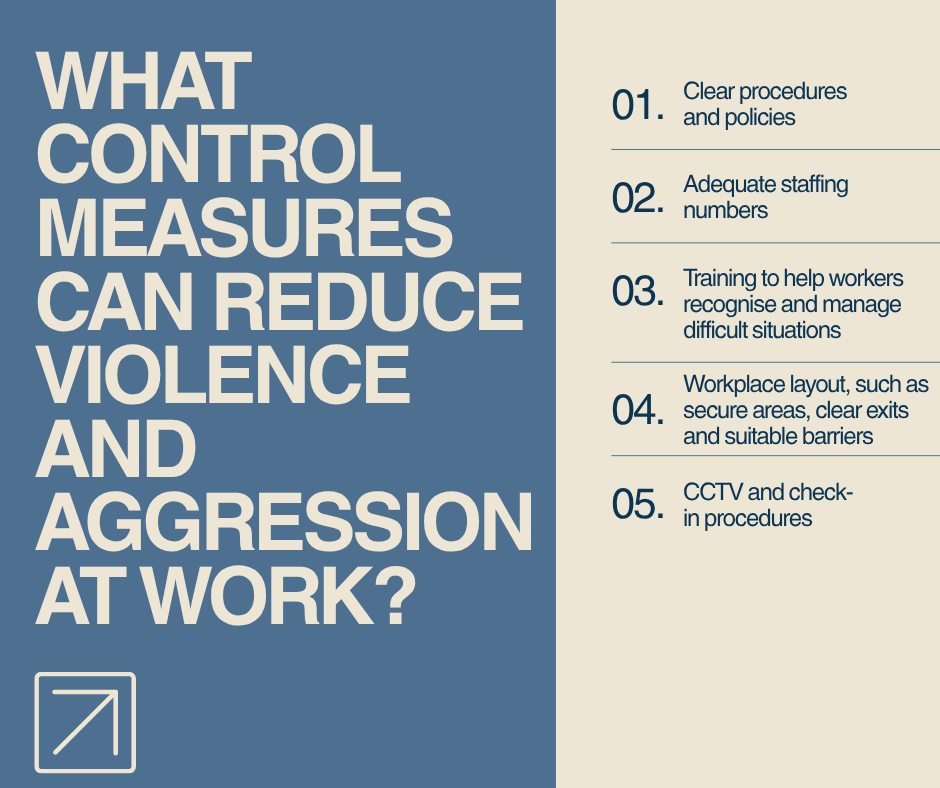 A range of control measures can reduce the risk of violence and aggression at work, including clear procedures and policies, adequate staffing numbers, and training to help workers recognise and manage difficult situations.
Organisations should also consider workplace layout, such as secure areas, clear exits and suitable barriers.
CCTV and other security measures can deter incidents and provide evidence if they occur. Lone workers may need check-in procedures and regular contact for additional support.
Workers should know how to report incidents and near misses, and what support is available afterwards.
How can WA Management help?
WA Management offer a Conflict Resolution online training course to help learners understand how to manage high-pressure situations.
We also offer bespoke risk assessments for any activities that might put workers at risk of violence and aggression.
Conflict Resolution and Preventing Radicalisation and Extremism courses are essential tools in preparing public facing workers for resolving conflict and carrying out Prevent duty.
Make sure you don’t miss out on our 10% off deal on these courses, available until the end of August. Simply enter the code ‘public10’ at checkout to save!
Read more Consultant’s blogs here.
To keep up to date with the latest health & safety news and advice, follow us on social media: